Blog
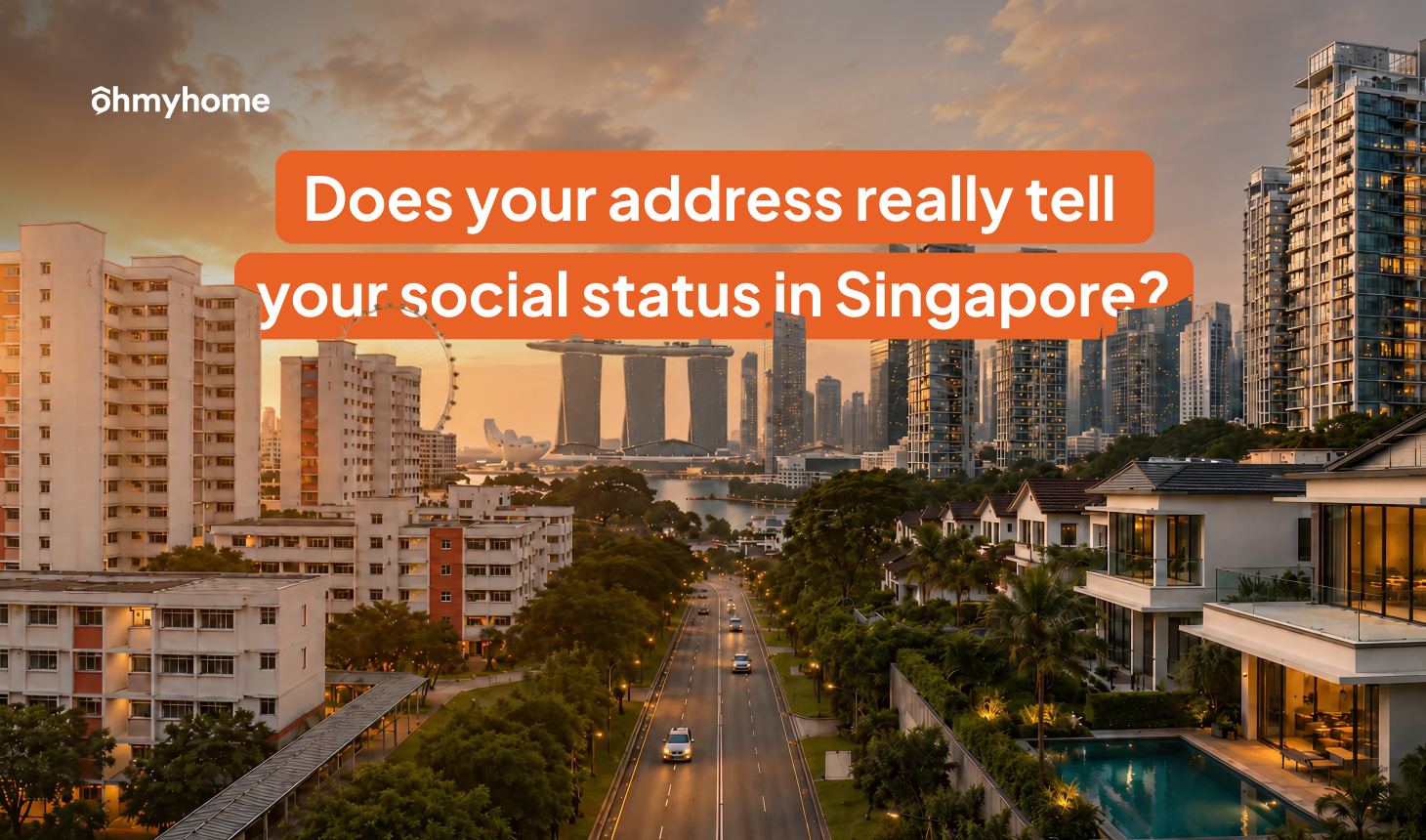
Do Singaporeans Measure Social Status By Where They Live?
Published 19 May 2026
TL;DR / Quick Summary:
Singaporeans measure social status by where you live because the system makes it almost impossible not to. Income-linked eligibility rules, public transaction data, and decades of homeownership culture have turned the humble address into one of the most loaded social signals in the country.
Most countries have class signals. The car you drive. The school you went to. The watch on your wrist. Singapore has all of those, too. But the one that does the most work, quietly and consistently, is your address.
And the reason it works so well here specifically, better than almost anywhere else in the world, is not because Singaporeans are more judgmental than other people… it is because Singapore accidentally built one of the most readable property systems on the planet. The data is public. The eligibility rules are income-linked. The transaction prices are searchable. And with a homeownership rate of over 90% in Singapore, practically the entire population is in the system.
What looks like a cultural habit is actually a very rational response to a very legible system.
Table of Contents:
- 1. The Government Created a Public Income Registry
- 2. There is No Arrival Point, Which Keeps the Anxiety Running
- 3. Moving Down the Property Ladder Feels Like Public Failure Even When It Is Financially Smart
- 4. Property is One of the Last Socially Acceptable Ways to Compare Openly
- 5. District Reputations Are Shaped by Perception Lag, Not Reality
- 6. The Social Cost of the Wrong Address is High Enough to Change Behaviour
- So, Does Your Address Actually Define Your Social Status in Singapore?
- Find Your Right Home
- Frequently Asked Questions
1. The Government Created a Public Income Registry

Singapore has a government-designed, publicly documented system that links property type directly to income bracket. And because the transaction prices for every Housing & Development Board (HDB) resale and every private property sale are published online by HDB and Urban Redevelopment Authority (URA), respectively, any Singaporean can look up what you paid for your home in under two minutes.
Put those two things together, and you get something genuinely unusual: a country where your property type tells people roughly what you earn, your transaction price confirms it, and all of that is publicly accessible to anyone with a browser.
So the next time you catch yourself doing the mental maths on someone’s address, relax. You are basically just doing open source research.
2. There is No Arrival Point, Which Keeps the Anxiety Running

Here is the thing about status hierarchies. In most areas of life, there is some version of “enough.” A salary that feels sufficient. A job title that feels settled. A car that does what a car needs to do.
Singapore’s property ladder does not have that. The anxiety does not decrease as you move up. It just changes shape.
HDB residents compare flat types and estates. Once in a condo, people compare developments, the floor, the age of the building, the facilities, and the proximity to the MRT. Landed homeowners compare terrace, semi-D, and bungalow, and within that, which road. Even at the top of the market, in good class bungalow territory, there are still finer gradations people make.
High Floor vs Low Floor Unit: What It’s Actually Like to Live on Each
There is no rung on the Singapore property ladder where the comparison stops. Which means the social anxiety that drives people to read status into addresses is not a phase you graduate out of. It scales with you. The address conversation just gets more specific as you go up.
This is genuinely different from most other status signals. A luxury watch signals wealth, and then the conversation moves on. Property in Singapore generates ongoing, renewable social comparison at every level of the market, indefinitely. That is why it stays so central to how people here measure each other.
3. Moving Down the Property Ladder Feels Like Public Failure Even When It Is Financially Smart

In most cultures, rightsizing your home as your life changes is completely unremarkable. Empty nesters rightsize. People move to less expensive areas to free up cash. Divorced couples sell the family home and get something more practical. Nobody bats an eye.
In Singapore, moving from a condo to an HDB flat is often seen as a visible step backwards, even if the HDB flat is in a better location, and it frees up hundreds of thousands in cash. Even if it is objectively the smarter financial move. The social read of that decision is: something went wrong.
Nobody says it out loud. But everyone thinks it.
This asymmetry, where moving up the property ladder reads as progress and moving down as a personal setback, costs people real money, regardless of the actual numbers. Singaporeans are holding onto private property they cannot comfortably afford simply because the social interpretation of moving to a less prestigious address feels worse than the financial discomfort of staying put.
The property ladder in Singapore is not just financial. It is reputational. And the direction you move on it is treated as a character statement.
4. Property is One of the Last Socially Acceptable Ways to Compare Openly

Singapore culture is, in many ways, uncomfortable with overt showing off. There is a certain social code around not being too flashy, not talking too openly about salary, and not making your wealth too visible in the wrong ways.
Property sits in a strange exception to all of that.
Talking about property prices, locations, what you paid, what your place is worth now, and what your neighbour sold for is completely acceptable dinner-table conversation in Singapore, in a way that talking about your salary or your investment portfolio often is not. Property discussion is not considered showing off. It is considered normal.
Which means property has become the primary socially sanctioned arena for status comparison in Singapore. The one place where you can communicate your financial standing, assess someone else’s, and do the whole social sorting exercise without it feeling inappropriate.
This is partly why the address carries so much weight. It is not just that property correlates with wealth. It is that property is the one category where Singapore’s otherwise muted approach to status display goes quiet, letting people talk directly. The address is the signal that is allowed. So it ends up doing a lot of the work that other signals do more quietly in other cultures.
5. District Reputations Are Shaped by Perception Lag, Not Reality

An area’s social reputation always lags behind its actual reality. And in Singapore, that gap costs people real money.
Take Yishun. Mention it, and someone will laugh. The memes practically write themselves. But strip away the internet mythology, and it is a well-connected town with decent amenities and prices that do not make you want to cry. The reputation just refuses to leave.
Then there is Punggol. For years, saying you lived there was basically admitting you had accepted life at the edge of civilisation. Ulu. Far. The place you moved to when you ran out of options. That reputation stuck even as Punggol completely transformed. The waterway, the parks, Northshore Plaza, and now Punggol Digital District are turning the entire northeastern corridor into a deliberate innovation hub. The reality moved on. The perception is still catching up.
This is the pattern everywhere. People pay a prestige premium for reputations the market has already priced in, while the better value lies in places the story has not yet caught up to.
6. The Social Cost of the Wrong Address is High Enough to Change Behaviour
All of the above add up to one thing. The wrong address in Singapore carries a genuine cost. Not a financial one. A social one. But social costs are still costs, and this one is high enough to change how people make very large financial decisions.
It shows up on dates, where your area gets read as a life stage assessment before you have said anything else. It shows up when families evaluate potential partners, where a good district somehow signals stability more convincingly than actual financial health does. It shows up at family dinners, in workplace small talk, in every situation where where you live comes up naturally, which in Singapore is basically every situation.
The pressure is ambient. Nobody invoices you for it. But it accumulates across years of social interactions into something very real: people buying earlier than they should, stretching further than is comfortable, holding on longer than makes sense.
The wrong address in Singapore has a social tax. And most people would rather pay the financial premium than the social one.
So, Does Your Address Actually Define Your Social Status in Singapore?
It defines something. Just not necessarily you.
What it does not define: how hard you worked to get there, what sacrifices you made, what your actual quality of life is like, or whether you even made the right financial call.
A person in a well-chosen HDB flat in a mature estate may be building wealth more sensibly than someone stretched thin in a condo they can barely afford. A family in an emerging town with great schools and a strong community may be living better than someone in a prestigious postcode with a two-hour daily commute.
But perception is stubborn. And in Singapore, the address conversation is not going away anytime soon.
The more useful question is not whether your address signals status, because it does, and everyone knows it.
The more useful question is whether you are choosing your home for the life it gives you, or the story it tells about you to everyone else. That is a question worth sitting with before you sign anything.
Find Your Right Home

At the end of the day, Singapore’s property market will always have its social scripts. The comparisons are not going away. The address conversation will keep happening at every family dinner, every first date, every reunion.
But the best property decisions we have ever seen are the ones made for the right reasons. The home that actually fits your life, your budget, your commute, your stage, your plans. It is the one you are comfortable in, not just comfortable telling people about.
That home is out there and Ohmyhome super agents would love to help you find it. Simply submit your preferences to us, and we will match you with a home that genuinely fits, not just one that looks good on paper.
Have questions or not sure where to start? WhatsApp us, and we will help you figure it out.
Frequently Asked Questions
1. Is it worth buying a condo in Singapore?
Buying a condo in Singapore is worth it if you can comfortably afford it without stretching your finances thin. Beyond the lifestyle perks, private property offers more flexibility in terms of who you can sell to and when. That said, a well-chosen HDB in a mature estate often builds wealth just as effectively, sometimes more so, at a fraction of the stress.
2. What are the best areas to buy property in Singapore?
The best area to buy property in Singapore depends on what you are optimising for. For long-term value, mature estates like Queenstown, Bishan, and Toa Payoh have historically held strong. For growth potential, areas like Punggol and Tengah are worth watching as infrastructure and amenities continue to develop. The smartest buys are usually where reality has outpaced reputation.
3. How do I check property transaction prices in Singapore?
You can check HDB resale transaction prices for free on the HDB website, and private property transactions on the URA website under their real estate information portal. Both are publicly accessible with no login required. Search by block, street, or development name and you will get recent transaction history including price, floor range, and size.